
Nigeria has deployed 18 professors to Rwanda for a two-year assignment to support higher education, research and academic capacity, in a move aimed at strengthening cooperation between the two countries.
The professors have been deployed under the Nigerian Technical Aid Corps (NTAC), a government programme through which Nigeria shares professional expertise and human resources with other countries.
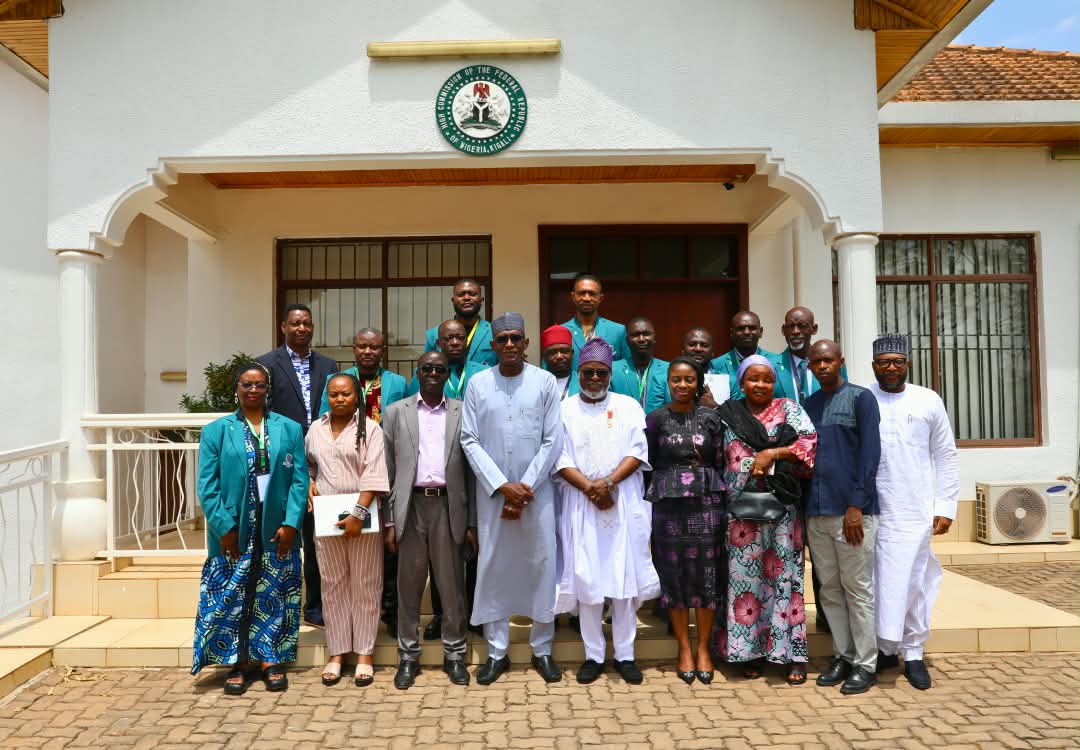
They were formally received at a ceremony hosted by the Nigerian High Commission in Kigali on 31 August 2026.
Of the 18 professors, 10 will work at the Protestant University of Rwanda (PUR), while eight will be based at the Catholic University of Rwanda (CUR).
They will spend two years in Rwanda, where they are expected to teach, conduct research and help build the capacity of lecturers and students.
Nigeria’s Ambassador to Rwanda, Ibrahim Zanna, said the deployment was not intended to generate financial benefits for Nigeria, but was part of efforts to strengthen bilateral relations and share the country’s expertise with other African nations.
He said Nigeria considered its human capital and professional expertise among its greatest assets and wanted to use them to support development across Africa.
“We have human capital, and I will say this is our blessing. That is why we have chosen to solve African problems with our local solutions and make it a better place,” he said.
Mr Zanna urged the professors not to focus only on teaching, but also to conduct research and develop lasting partnerships with Rwandan academics.
“They are going to teach, but they are researchers,” he said.
He encouraged them to use their two-year assignment to develop joint research projects and build professional networks with researchers in Rwanda.
“I believe one of the things that will move Africa is collaboration between African researchers beyond capacity building,” he said.
At the Protestant University of Rwanda, the 10 professors will support programmes in information technology, urban planning, environmental studies, architecture and green technologies, as well as project management.
At the Catholic University of Rwanda, the eight professors will contribute to programmes in English literature, accounting, linguistics, finance, medical biology and information technology.
Their responsibilities will include teaching and research, as well as sharing their knowledge and experience with students and fellow academics.
The host universities will provide accommodation and security, while the Nigerian government will provide stipends for the volunteers.
The Vice-Chancellor of the Protestant University of Rwanda, Prof Olu Ojedokun, described the deployment as a major opportunity for the institution to strengthen its academic and research capacity.
He said the professors would help the university improve its programmes, expand research and build stronger international partnerships.
“It means we can increase capacity. It means we can do more research. It means that we can go up in the ranking of universities in the world, in Africa and, of course, in Rwanda,” he said.
Prof Ojedokun added that the Nigerian academics would also help students gain practical knowledge and develop innovative ideas.
He said the university hoped their interaction with students would encourage them to become job creators rather than simply job seekers.
PUR already has a partnership with Lead City University in Nigeria, under which Rwandan students can access scholarships for master’s and PhD studies.
Prof Ojedokun said the arrival of the Nigerian professors could help the university develop further partnerships with institutions in Nigeria.
Ambassador Zanna said the deployment was part of a broader relationship between Rwanda and Nigeria, which includes cooperation in education, security, training, trade and economic development.
He said the two countries also have a cooperation framework signed in 2021, through which they discuss different areas of mutual interest.
He added that Nigeria would be willing to share its expertise with Rwanda in areas such as energy and technology if opportunities for cooperation arose.
The ambassador also said the wider goal of such cooperation was to strengthen Africa’s ability to address its own challenges using African expertise and solutions.
The Nigerian Technical Aid Corps was established in 1987 to enable Nigeria to share its human resources and professional expertise with other developing countries.
Since its establishment, the programme has deployed professionals to more than 40 countries, including specialists in education, medicine, engineering and other technical fields.
There are currently 46 NTAC volunteers working in universities across Rwanda.
Mr Zanna said the programme showed how African countries could use their own human capital and expertise to contribute to the continent’s development rather than relying entirely on assistance from outside Africa.