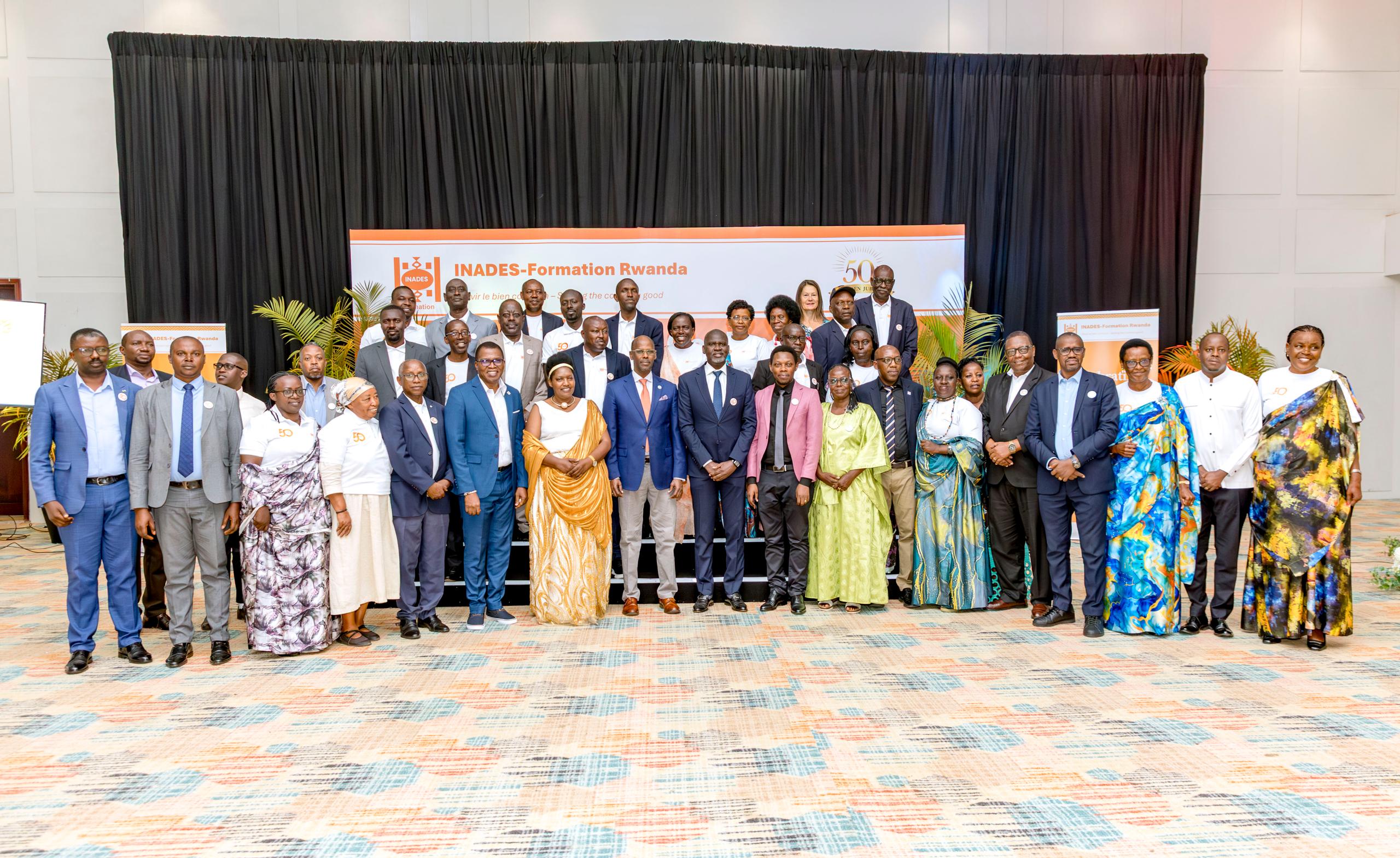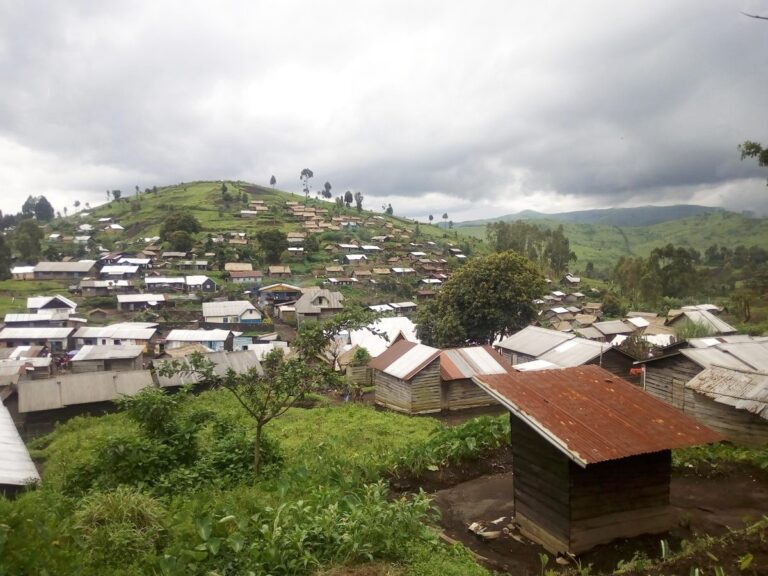

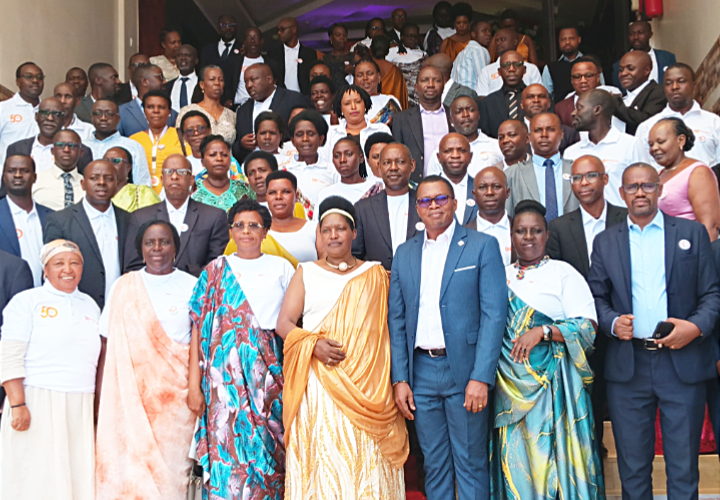
INADES-Formation Rwanda, an organisation that has worked in Rwanda for 50 years to support farmers and livestock keepers, has celebrated its 50th anniversary, with beneficiaries highlighting the changes its programmes have brought to their livelihoods.
The celebrations, held on 28 August 2026, brought together government officials, development partners, farmers, livestock keepers and other stakeholders.
The Ministry of Agriculture and Animal Resources (MINAGRI) praised INADES-Formation Rwanda for its long-standing contribution to the development of agriculture and livestock farming, describing the sector as a key pillar of Rwanda’s economy and the livelihoods of its people.
Dr Olivier Kamana, Permanent Secretary at MINAGRI, said INADES-Formation Rwanda had been a reliable partner in strengthening farmers’ knowledge and skills and helping them adopt improved farming practices.
“Celebrating the 50th anniversary of INADES-Formation Rwanda means celebrating a reliable partner. Agriculture is a key pillar of Rwanda’s development, and this organisation has continued to support farmers over the years. We look forward to strengthening our partnership with INADES-Formation Rwanda,” he said.
Dr Kamana said agricultural development could not depend solely on technology and agricultural inputs, but also required farmers to have the knowledge and skills to use them effectively.
“Agricultural development in Rwanda cannot rely only on technology and fertilisers. It also requires people with the knowledge and skills to use that technology and find solutions to their own challenges. That is why we appreciate the work of INADES-Formation,” he said.
As Rwanda prepares for the 2027A agricultural season, Dr Kamana urged farmers to begin preparing their land early, including through activities aimed at conserving soil.
He also announced that MINAGRI plans to introduce a conservation agriculture programme covering 100 hectares during the 2027A season. The programme is intended to equip farmers with the knowledge and skills needed to adopt sustainable farming practices that can withstand the effects of climate change.
“Climate change is becoming increasingly concerning. The Ministry of Agriculture will introduce a conservation agriculture programme on 100 hectares in 2027A. This requires knowledge, such as the knowledge INADES-Formation has been providing,” he said.
Dr Kamana added that the government remained committed to ensuring that farmers received agricultural inputs, including fertilisers, on time.
He described INADES-Formation Rwanda’s 50-year presence in the country as a sign of the organisation’s commitment and its important contribution to supporting farmers and advancing agriculture.
Some farmers and livestock keepers who have benefited from INADES-Formation Rwanda’s programmes say the training they received helped them change their farming practices, increase production and begin viewing agriculture as a source of economic opportunity.
Nyandwi J. Claude, a farmer from Huye District, said he previously lacked sufficient knowledge about crop selection and improved farming methods.
He said training from INADES-Formation Rwanda had enabled him to make more informed decisions, resulting in increased production.
“Before INADES came, I could not produce enough to take to the market. Now I produce enough to feed my family and also supply the market,” Nyandwi said.
He said his maize production had increased from about 80kg to between 400kg and 500kg.
The higher production, he said, had enabled him to meet household needs, including paying health insurance contributions and school fees for his children.
“INADES taught me how to farm in ways that conserve the soil. It also changed my mindset. I no longer farm simply to bring the harvest home; I also think about producing for the market,” he said.
Theopiste Nyiramahoro, a coffee farmer from Kirehe District who benefited from INADES-Formation Rwanda’s programmes, said the organisation had helped farmers improve coffee production while promoting soil conservation.
She said farmers received training and educational materials, including books, which helped them better understand improved farming practices.
According to Nyiramahoro, coffee production among the farmers increased significantly, from about 10 tonnes to more than 50 tonnes of unprocessed coffee.
She said farmers were determined to maintain the progress they had made and share their knowledge with others who had not yet benefited from INADES-Formation Rwanda’s programmes.
Désiré Bimenyimana, Director of INADES-Formation Rwanda, said the organisation was proud of the progress farmers had made over the past five decades.
He said INADES-Formation Rwanda had contributed to helping farmers move beyond subsistence farming towards more productive agriculture aimed at supplying markets.
Since INADES-Formation Rwanda began operating in the country in 1976, about 635,000 people have benefited from its programmes.
Bimenyimana thanked government institutions, development partners, farmers and other stakeholders who had contributed to the organisation’s 50-year journey.
“We thank our partners, government authorities and beneficiaries who have supported us throughout this journey,” he said.
He also called on more partners to join the organisation as it begins a new phase of its work under its new strategic plan.
INADES-Formation Rwanda currently operates in nine districts, but Bimenyimana said it planned to expand its programmes to reach more farmers across the country.
“We call upon partners to join hands with us as we move forward, so that we can create meaningful impact and continue walking alongside farmers on this journey of transformation,” he said.
INADES-Formation Rwanda began operating in Rwanda in 1976, focusing on supporting farmers and rural communities through training, knowledge-sharing and practical programmes aimed at improving agriculture and livestock farming.
After 50 years, the organisation says it will continue working with farmers, government institutions and development partners to expand its programmes and promote sustainable agriculture that can withstand the effects of climate change.
For farmers who have benefited from its programmes, the knowledge they acquired has helped them change their practices, increase production and begin seeing agriculture as a source of income and an avenue for improving their families’ livelihoods.
The 50th anniversary provided an opportunity to celebrate INADES-Formation Rwanda’s achievements over the past five decades, while also marking the beginning of a new chapter focused on continuing to support farmers and livestock keepers and contributing to the development of Rwanda’s agricultural sector.