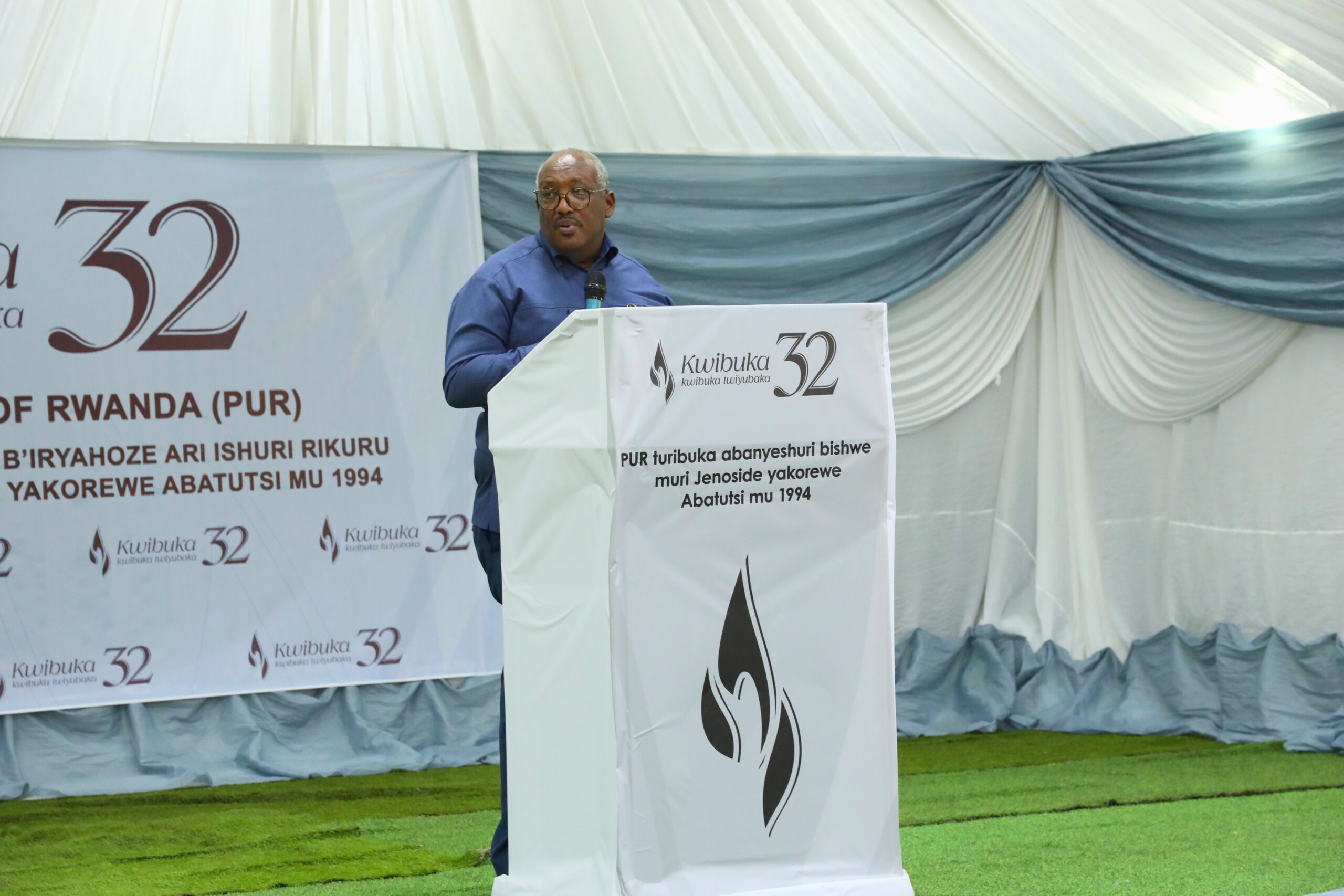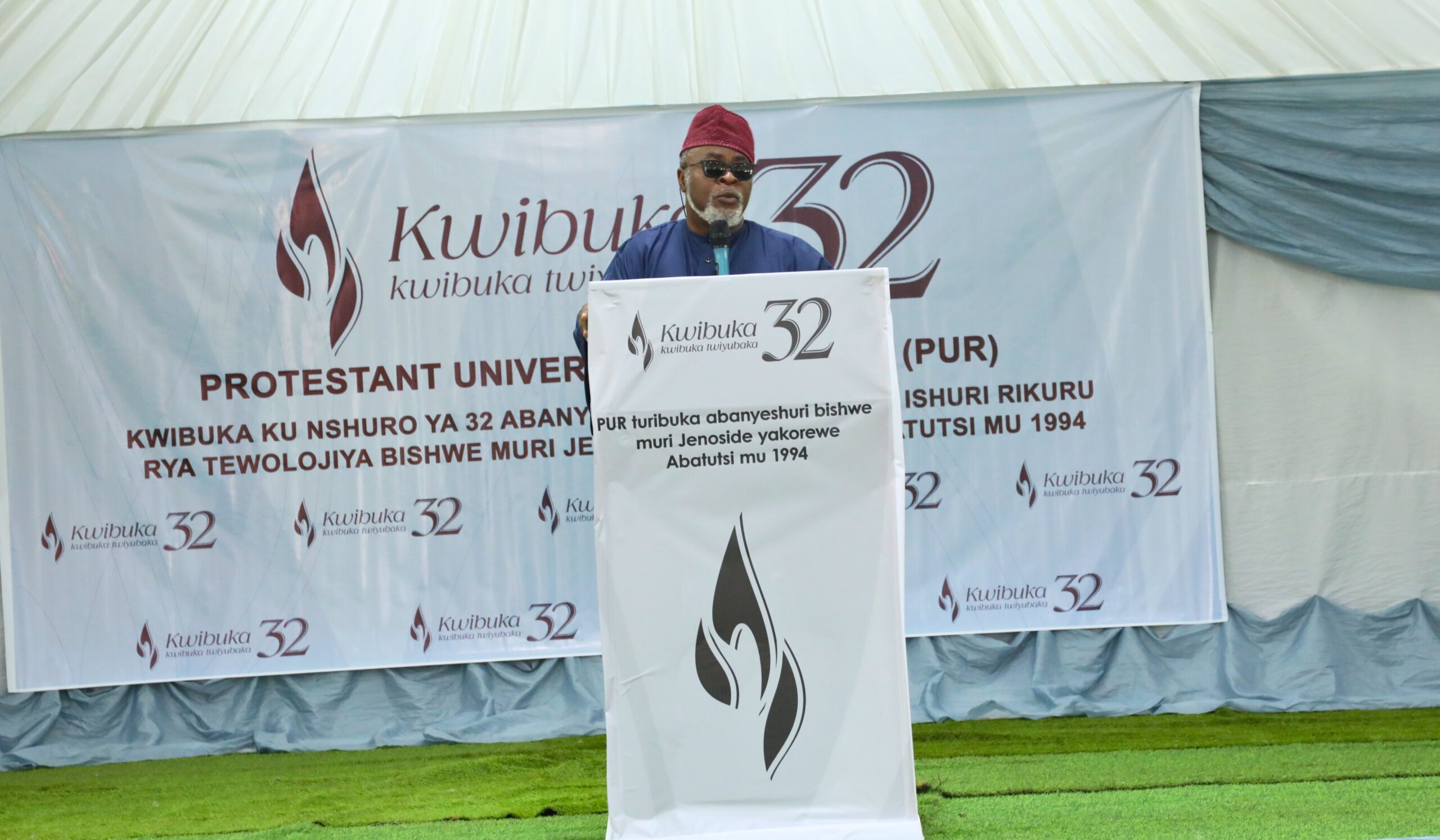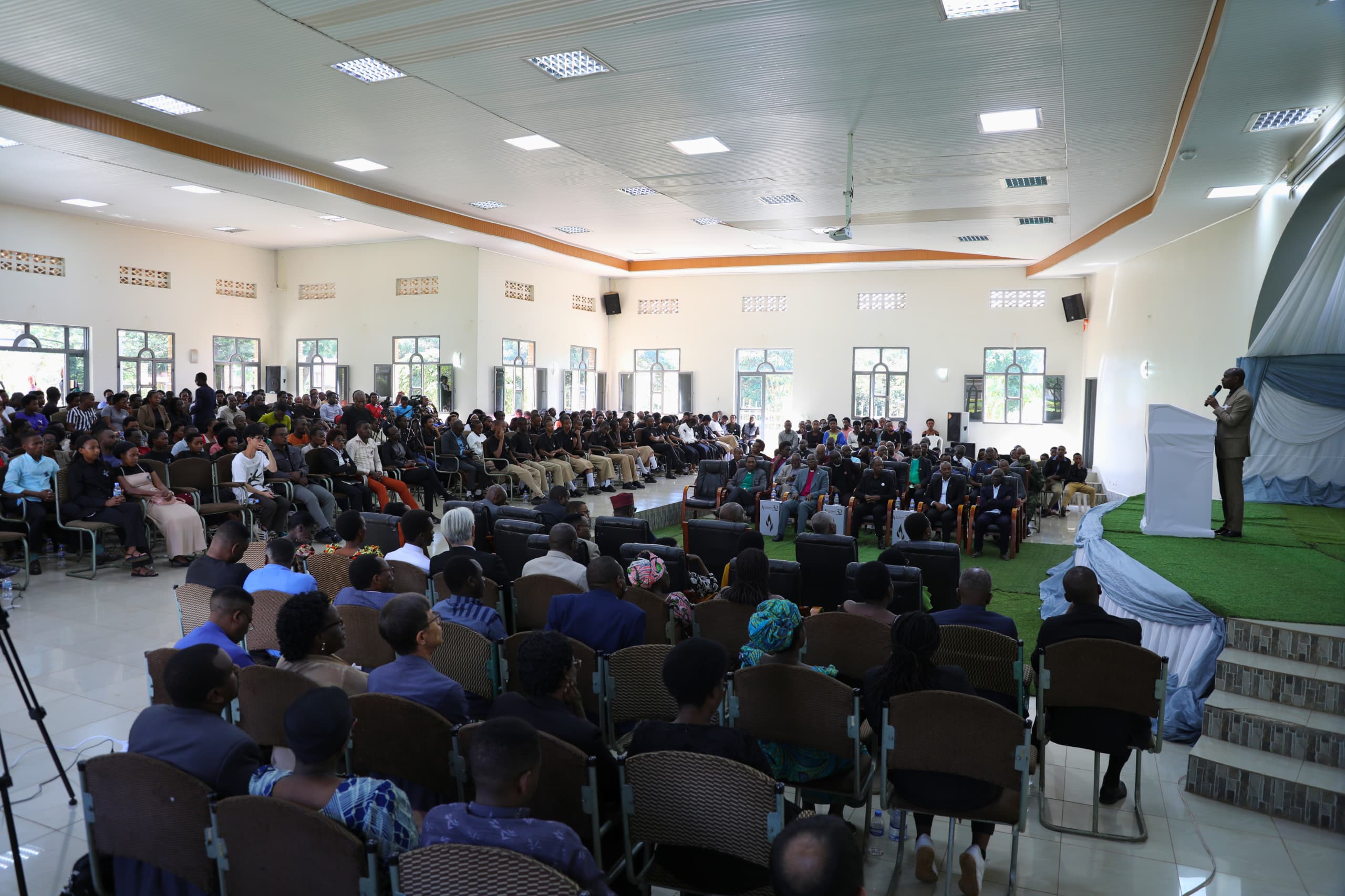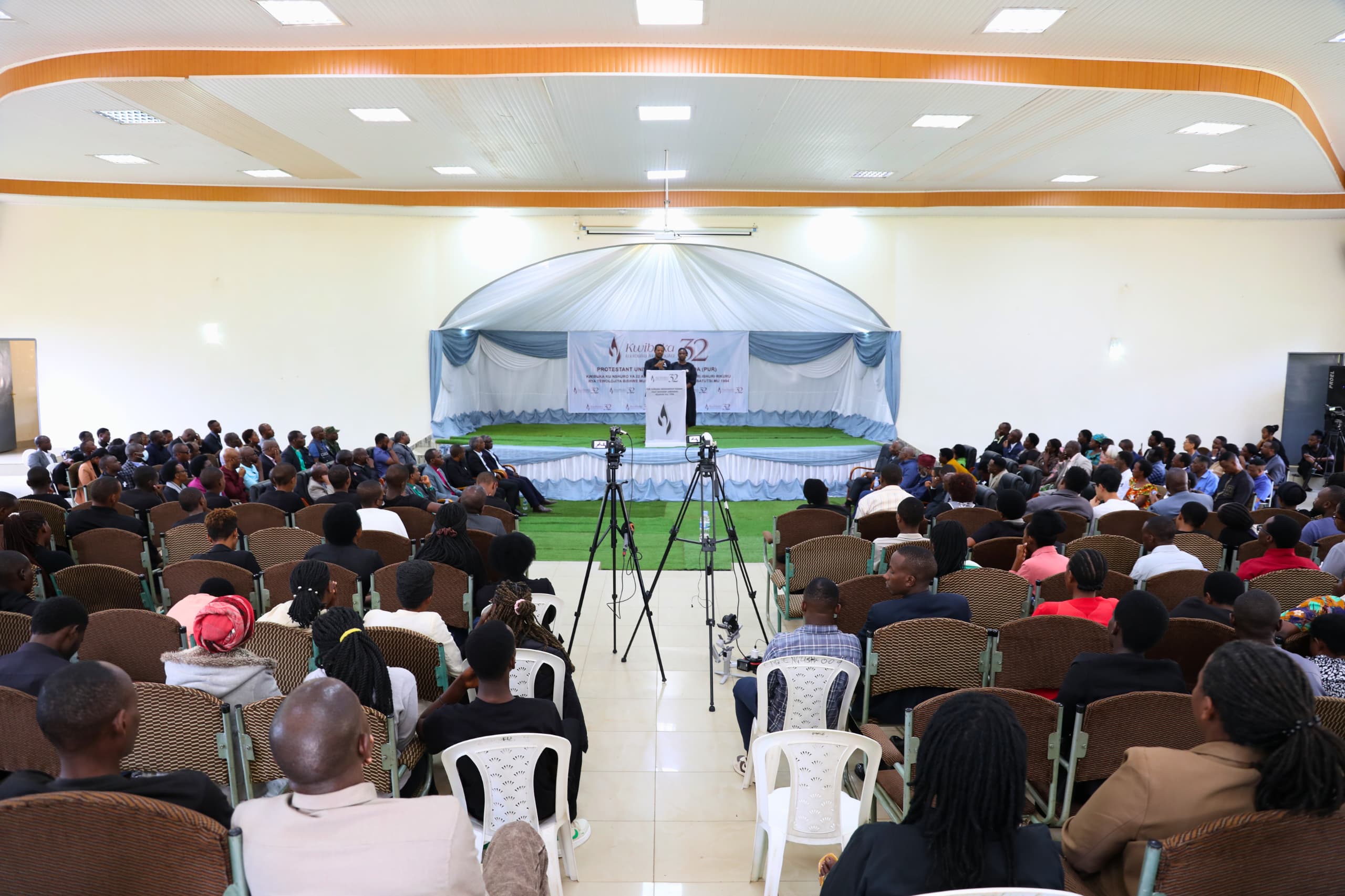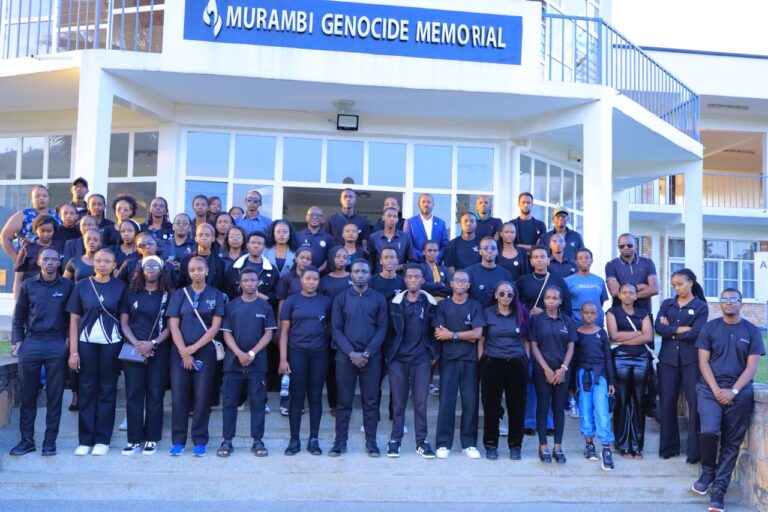


The Protestant University of Rwanda (PUR) on Sunday, June 7, 2026, held a solemn commemoration ceremony to honor students of the former School of Theology who lost their lives during the 1994 Genocide against the Tutsi. The event was held as part of the 32nd commemoration of the 1994 Genocide against the Tutsi.
The ceremony brought together the Guest of Honour, Senator Prof. Jean Pierre Dusingizemungu, church leaders from various denominations, government representatives, academic staff, and students.
In his welcoming remarks, PUR Vice-Chancellor Prof. Olu Ojedokun expressed gratitude to all those who joined the university community in honoring the victims of the Genocide. He reaffirmed the institution’s commitment to contributing to Rwanda’s development through the provision of quality education, emphasizing that such efforts are essential in ensuring that genocide never occurs again.
He said “Even though we remember the past, and even though we are hurt by the past, and even though we are pained by the past, we can use that as a springboard to unite ourselves and to make more progress. We will never forget; we will remember, and that remembrance will spur us and inspire us. And we hope that as we go through this service, as we mourn and even as we sometimes silently weep and openly weep, we will remember that there is a tomorrow and that tomorrow for Rwanda is a bright future.”
Delivering a presentation during the commemoration, Pastor Viateur Ruzibiza noted that the decision by churches and religious institutions to establish remembrance programs is a positive development. He also highlighted the significant shift in mindset regarding the commemoration of victims of the Genocide against the Tutsi compared to previous years.
“The concept of remembrance within religious people, churches, and other faith-based settings was once misrepresented and, in some cases, associated with what could be described as minimization of the genocide. Some people even claimed that remembrance was a demon. Certain self-proclaimed prophets and prayer groups would say, ‘A demon called remembrance has risen in the country; be careful not to be overtaken by it,’” Said Viatuer.
Pastor Ruzibiza stressed that remembrance is deeply embedded in Christian teaching, arguing that Christians have a spiritual responsibility to remember.“The Bible repeatedly calls on believers not to forget. The message of remembrance is deeply rooted in Scripture,” he added.
In his message, Hon. Senateri Prof. Dusingizemungu Jean Pierre, highlighted the critical role universities play in promoting national unity and combating divisionism and genocide ideology. He underscored the importance of the values and principles enshrined in Rwanda’s Constitution as a foundation for building a cohesive society.
The Senator stated that Rwanda’s history serves as a cornerstone of national unity and resilience and should therefore be taught comprehensively and supported by rigorous academic research.
“Rwandan history should be taught as a distinct academic discipline. It should be studied in deeply and subjected to thorough research so that educators can accurately and effectively convey it,” he said.
He further stressed the need to increase the number of qualified researchers and educators capable of preserving and transmitting this legacy to future generations.
“It is essential that university lecturers receive the support needed to prepare competent future teachers while also training researchers who will continue to discover and document our nation’s history. We need to keep expanding our understanding of our country’s past,” he added.
Messages delivered during the event reflected on the role played by churches and religious institutions in the planning and execution of the 1994 Genocide against the Tutsi. At the same time, speakers examined the contribution of these institutions to promoting national unity, reconciliation, and resilience among Rwandans.
The young people were urged to remain focused on their aspirations and to work diligently toward building a knowledge-based economy capable of driving sustainable national development.
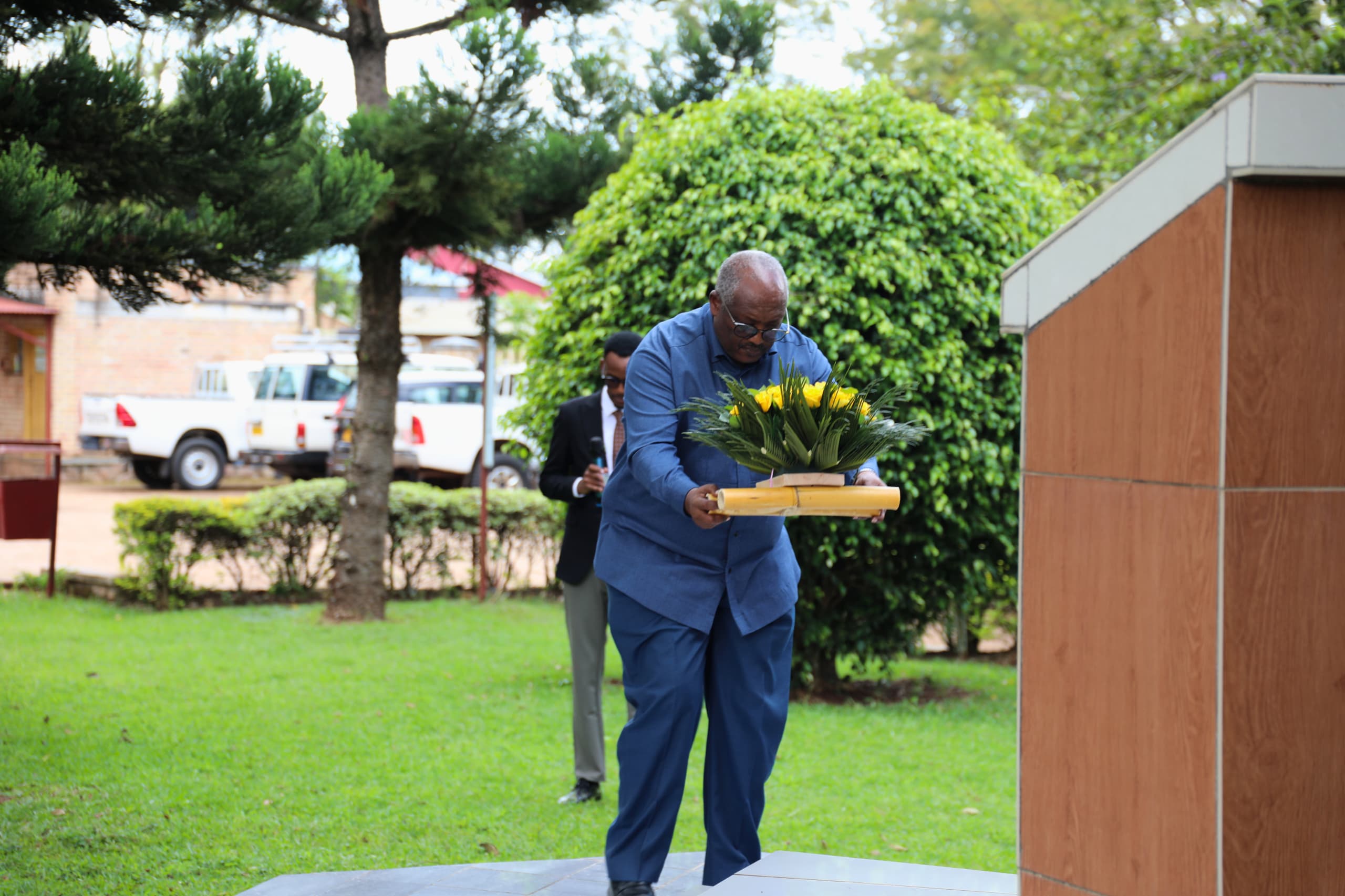
The commemoration concluded with the laying of flowers at the Genocide Memorial monument dedicated to the victims of the 1994 Genocide against the Tutsi.